Record#
在 https://github.com/Cosmo-klara/Qwen_R ↗ 可以获取本周的代码变动
2025-12-18#
- 解决没有 loss 的问题,由于训练数据和 transformer 中标准的格式不同,label 需要自己选择,实现后 labels 有效 token 只剩
<|VIDEO|>,未包含 assistant 文本
debug:一直都是 |VIDEO| 占位符
QwenOmniProcessor 会在 视频 patch 展开后动态插入 <|VIDEO|> token,如果按“字符位置 / 拼接文本”计算 labels,对齐关系会被破坏,assistant token 的真实位置只能在 processor 之后的 input_ids 中确定。在 processor 输出的 input_ids 中定位 <|im_start|> assistant,只对 assistant 回复区间做 label,其余位置置为 -100 mask 掉。
- 解决没有梯度的问题,Loss requires_grad: False,loss 有值但 loss.requires_grad=False
因为用了 model.gradient_checkpointing_enable(),得启用 model.enable_input_require_grads()
2025-12-19#
由于数据集存在多轮次对话,之前实现的时候处理的是拆成多个单轮对话,不过这样训练时间显著增加(370h),因为相当于近 10 倍音视频特征提取的次数,看了 LongVALE 的 dataset 实现,发现是直接将多轮次对话拼接起来,只做一个超长度后按轮次截断的处理。
重新实现了多轮对话训练的策略,实现了和 LongVALE 类似的多轮对话策略,超长按照轮次截断,通过了单元测试,只是没卡跑不了还
2025-12-21#
没卡用,被占满了,看论文和找数据集
VideoLLaMA 2 和 Fork-Merge Decoding
Apollo: An Exploration of Video Understanding in Large Multimodal Models
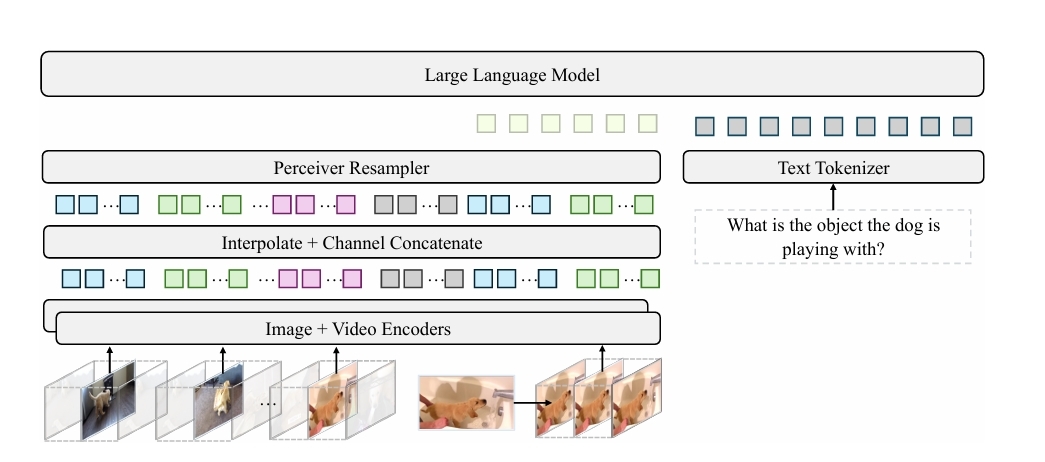
这个的有点像 Q-Former ↗,应该是源自 Perceiver: General Perception with Iterative Attention ↗
或许这种架构更适合长视频?里面还提到使用 fps 比均匀采样效果更好,但实际上似乎是因为每帧令牌数(tpf)
2025-12-22#
等卡,写了一个先把音频提出来的脚本,理论上节省一下训练时提取音频的时间;
明天的工作计划:
-
看论文,整理 Q-Former 这种架构的思路,主要参考 Apollo: An Exploration of Video Understanding in Large Multimodal Models;这里面提到对于长视频理解的部分可以看看
-
看 SlowFast-LLaVA-1.5 这个也是长视频理解
-
考虑是否从仅视觉模型进行训练,在融合音视频上选择 Q-Former 这种架构的思路,用音频作为可选线索辅助视觉模型理解长视频?
2025-12-23#
今天空了两张卡出来,在训练过程中又遇到了显存不足的问题,仔细看看了,发现是在计算 Cross-Entropy Loss 的时候爆的显存,
print(“vocab size:”, processor.tokenizer.vocab_size) 发现 vocab size 是 151643, 而 LongVALE 的 vocab size 是 32000,这个调整一下之前多轮对话策略的 max_total_tokens,设置 total_tokens = input_tokens + label_tokens
然后用 total_tokens 和传入的 max_total_tokens 进行比较,如果超出就删除最早的一轮对话的 token,这里还要注意因为后面发现有个数据单轮对话就超长度爆显存了,所以在比较的时候不能因为是最后一轮就保留
好像有点 bug 代码,看日志看到有 label token = 0 的,但是没有空卡不好测试的
训练相关#
因为显存是在算 Cross-Entropy Loss 的时候爆的,所以在看有没有什么能优化显存的方法,然后看到一篇看起来效果非常夸张的的论文 https://arxiv.org/abs/2411.09009v1 ↗
这个论文就是讲随着语言模型的规模不断扩大,它们的词汇量也随之增长,这导致在训练过程中,LLMs 的内存占用不均衡地集中到了损失计算中的交叉熵;因为交叉熵损失计算需要具体化一个维度为 N × V(其中 N 是 token 数量,V 是词汇表大小)的 logits 矩阵;
提出剪枝交叉熵(CCE)方法:一个极度节省显存的交叉熵损失实现方式,能够在训练大语言模型时避免产生巨大的 logits 张量;想着用一下这个损失函数来,不过看了里面代码的实现和现版本的 transformer 很不一样,先不尝试了
下面是记录探寻 transformers 库中模型 self.loss_function 实现的过程
发现 transformers 在模型的 forward 中直接调用了 self.loss_function
    loss = None
    if labels is not None:
        loss = self.loss_function(
            logits=logits, labels=labels, vocab_size=self.config.get_text_config().vocab_size
)往上定位 self.loss_funciton 的实现时,发现其定义在父类 PreTrainedModel 中( src/transformers/modeling_utils.py 内):
class Qwen2_5OmniPreTrainedModel(PreTrainedModel):
class Qwen2_5OmniPreTrainedModelForConditionalGeneration(Qwen2_5OmniPreTrainedModel):
class Qwen2_5OmniThinkerForConditionalGeneration(Qwen2_5OmniPreTrainedModelForConditionalGeneration, GenerationMixin): @property
def loss_function(self):
if hasattr(self, "_loss_function"):
return self._loss_function
loss_type = getattr(self, "loss_type", None)
if loss_type is None or loss_type not in LOSS_MAPPING:
logger.warning_once(
f"`loss_type={loss_type}` was set in the config but it is unrecognized. "
f"Using the default loss: `ForCausalLMLoss`."
)
loss_type = "ForCausalLM"
return LOSS_MAPPING[loss_type]
@loss_function.setter
def loss_function(self, value):
self._loss_function = value首先会检测是否包含 _loss_function 属性,如果存在该属性,则直接使用 self._loss_function 自定义定义的损失函数;
然后没有自定义损失函数的话就通过 LOSS_MAPPING 字典映射,找 loss_type 对应的损失函数;如果 loss_type 不在 LOSS_MAPPING 中或者 loss_type 为 None,默认使用 “ForCausalLM” 对应的损失函数
在 LOSS_MAPPING 中找 “ForCausalLM”: ForCausalLMLoss, 实现如下:
def ForCausalLMLoss(
    logits,
    labels,
    vocab_size: int,
    num_items_in_batch: torch.Tensor | None = None,
    ignore_index: int = -100,
    shift_labels: torch.Tensor | None = None,
    **kwargs,
) -> torch.Tensor:
    # Upcast to float if we need to compute the loss to avoid potential precision issues
    logits = logits.float()

    if shift_labels is None:
        # Shift so that tokens < n predict n
        labels = nn.functional.pad(labels, (0, 1), value=ignore_index)
        shift_labels = labels[..., 1:].contiguous()

    # Flatten the tokens
    logits = logits.view(-1, vocab_size)
    shift_labels = shift_labels.view(-1)
    shift_labels = shift_labels.to(logits.device)
    loss = fixed_cross_entropy(logits, shift_labels, num_items_in_batch, ignore_index, **kwargs)
return loss其中 fixed_cross_entropy 实现如下:
def fixed_cross_entropy(
    source: torch.Tensor,
    target: torch.Tensor,
    num_items_in_batch: torch.Tensor | None = None,
    ignore_index: int = -100,
    **kwargs,
) -> torch.Tensor:
    reduction = "sum" if num_items_in_batch is not None else "mean"
    loss = nn.functional.cross_entropy(source, target, ignore_index=ignore_index, reduction=reduction)
    if reduction == "sum":
        # just in case users pass an int for num_items_in_batch, which could be the case for custom trainer
        if torch.is_tensor(num_items_in_batch):
            num_items_in_batch = num_items_in_batch.to(loss.device)
        loss = loss / num_items_in_batch
return loss可以看到没有做优化之类的;或许可以参照 cce ↗ 或者 Liger-Kernel ↗ 里面提到的减少训练显存的使用;
后面发现 transformers 已经支持了 Liger-Kernel,需要在 TrainingArguments 中启用,还有就是可以开 torch_compile=True ;等跑完一轮试试
后期工作相关#
从一个仅视觉的模型出发,扩展到带音频和语音的多模态模型?
LongVALE 三个任务:
-
Grounding:事件描述,提示说明结合视觉和音频,输出相对的时间戳
-
Captioning:无删减视频,输出全部事件描述及时间戳
-
Seg Captioning:给出相对时间戳,输出对应的事件描述
也就是说两个模态的时间信息都要保留,如果直接省去一些帧会影响模型对于时间的判断吧?
那如果要实现去掉冗余帧,应该先按 fps 采样,然后计算每帧的 Token 和全局文本 Token 的注意力权重,在保留注意力得分高的关键视觉 Token 的前提下,动态选择帧采样策略,然后训练模型。不过这样只能学习相对时间的观念吧?因为训练的时候如果用真实时间,但是帧采样率不同会让模型误判时间?
此外,音频 token 该怎么用呢?用音频对应提示吗,按理说音频信息的采用是为了更好的描述视频内容(Captioning 和 Seg Captioning),以及在 Grounding 中参照音频划分多模态的事件边界;所以音频和文本与视频都有相关;该怎么做呢?
和文本是要丰富表述(也相当于是丰富视觉信息?),和视频是要判断边界
一些参考论文收集的资料#
Apollo: An Exploration of Video Understanding in Large Multimodal Models
- fps 采样在模型训练和推理过程中优于均匀采样
- 每秒令牌数(tps) 和 fps 之间存在权衡,每帧 8-32 个 token 为最佳。发现对 fps 的依赖性很小,每帧令牌数(tpf)和 tps 更为确定